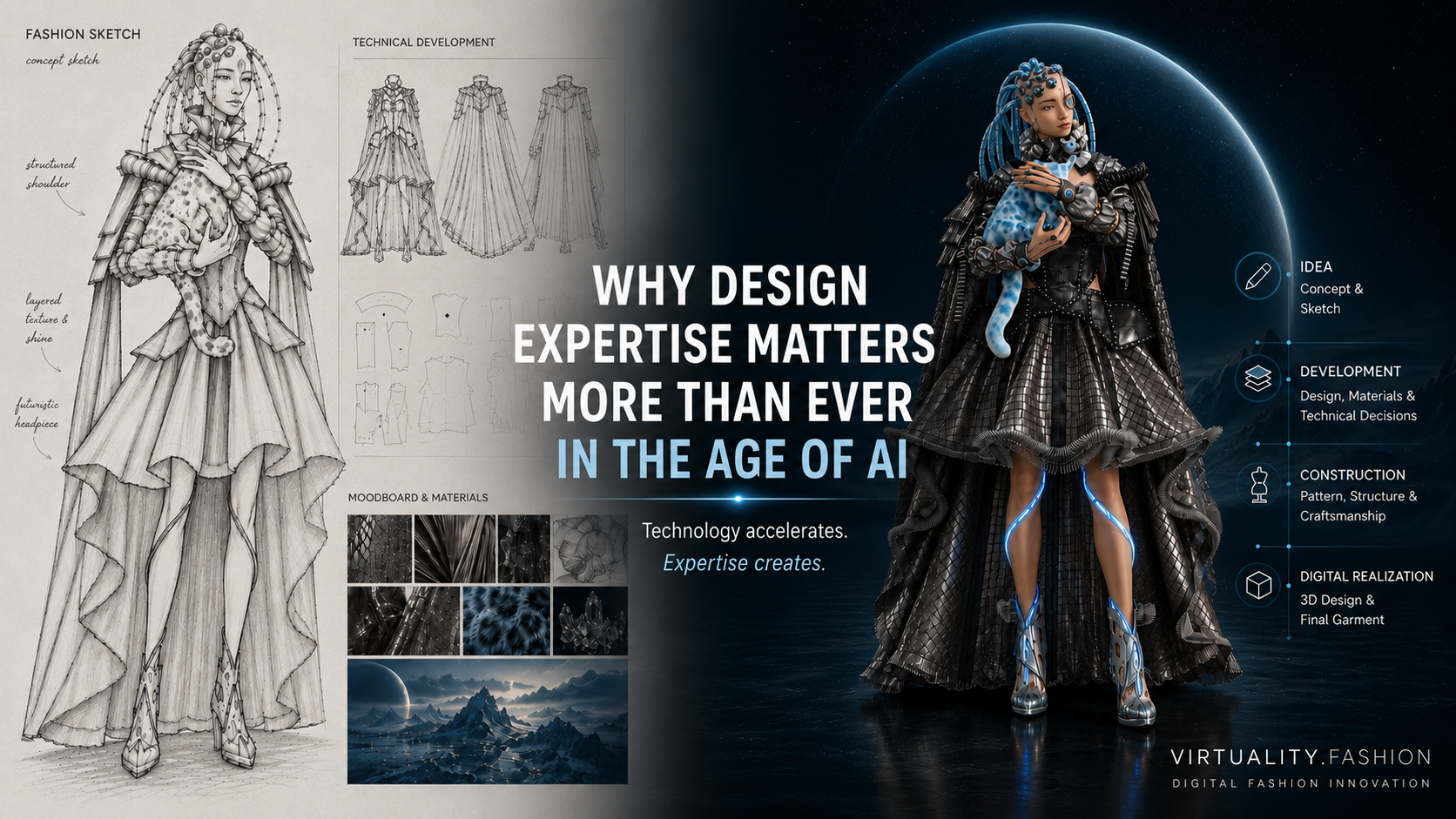
What We Learned About AI in Fashion
Three areas where AI is doing real work in fashion development right now, and three where strong technical foundations matter more. A practical view from someone who has worked with AI in fashion since 2023.
What We Learned About AI in Fashion
By Amnon Shalev, Founder & CEO, virtuality.fashion
I founded virtuality.fashion in 2015 to build a platform for digital fashion development. The original setup had three parts: one of the industry's earliest online virtual showrooms, a client portal for files and product folders, and real-time work between clients and our 3D team. The vision was 3D-as-a-service.
Before that, I was VP Sales EMEA at Optitex. I saw the gap firsthand. Brands needed 3D, but the software was expensive, the learning curve was steep, and integration was complicated. Most brands couldn't get there. The platform was built to close that gap.
In mid-2023, we added an AI layer to our work. It's been a meaningful part of what we do since. What changed more recently is how I talk about it. AI is a serious capability we use carefully. It isn't the headline of what virtuality.fashion offers - the team is. This piece is about what we've learned along the way.
This piece is for fashion brand and product teams trying to figure out what AI actually does for development work.
Where AI Earns Its Place in Fashion Today
Three areas where AI is doing real work right now.
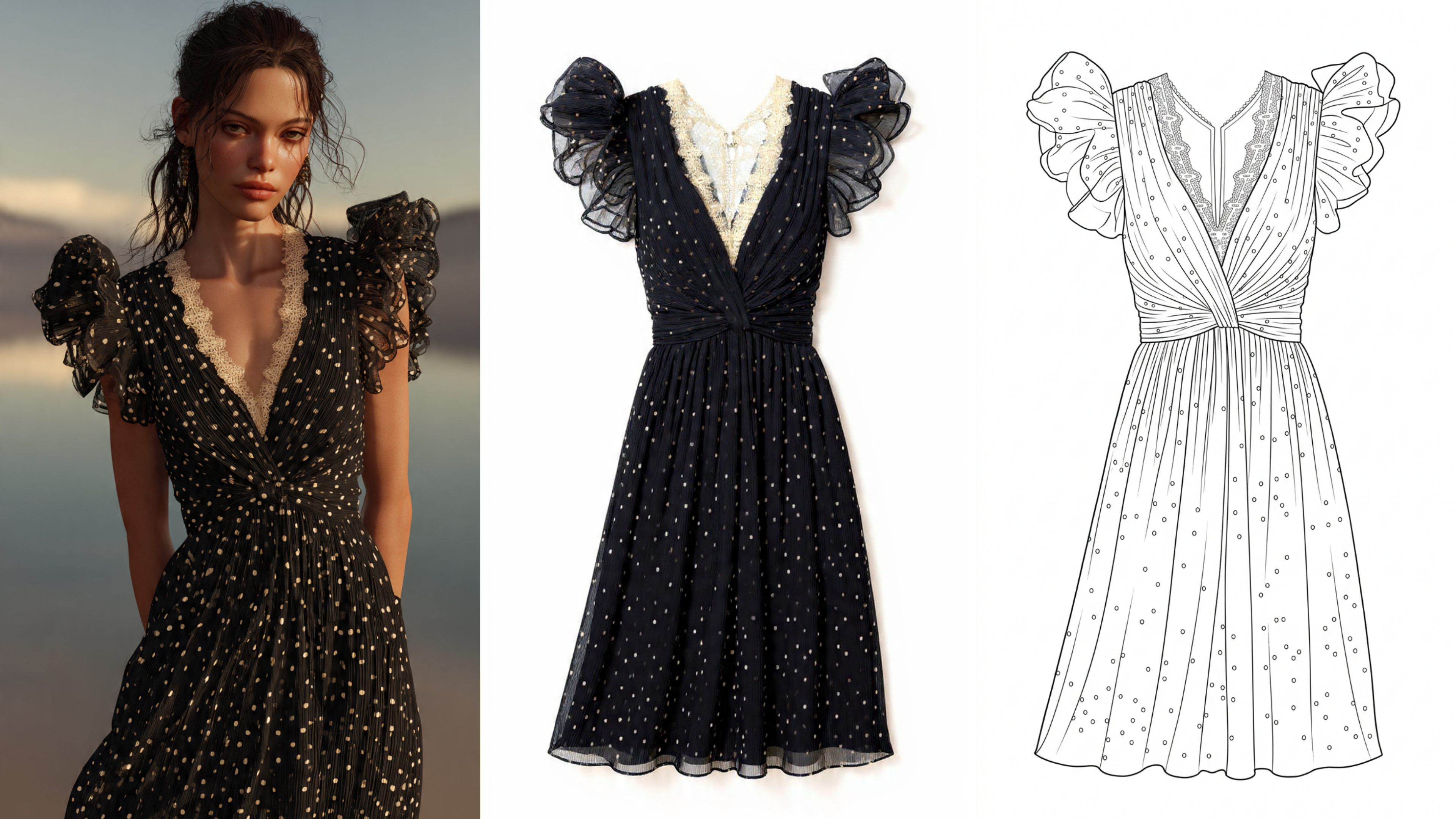
Ecommerce visuals at scale. Generating model imagery for product pages, lookbooks, and campaigns is where AI has matured fastest. It produces diverse, brand-consistent visuals across body types, demographics, and contexts, at a fraction of what a photoshoot costs. Companies like Pixel Moda produce 14 million images and videos a year using AI-assisted workflows. For brands with thousands of SKUs, this changes how product pages get built.
Pattern recognition and trend analysis. AI processes large volumes of visual and behavioral data well. It surfaces patterns that human teams would either miss or need months to find. Brands that put this into their trend work and merchandising have better signal to work with.
Repetitive variations on a defined base. Once a 3D garment exists and has been validated by a human, AI can produce colorways, styling variations, and sizing iterations on top of it quickly and consistently. The original design and fit work needs human expertise. The variations that come after don't.
Where AI Needs Strong Foundations
Three areas where AI works well when it's built on validated technical foundations, and falls short when it's used on its own.
Technical design and tech packs. A production-ready tech pack needs precise spec interpretation, knowledge of manufacturing constraints, and the kind of judgment calls that come from years of working with factories. Business of Fashion reported that AI-generated product mockups can "leave shoppers confused and disappointed by the real thing" when the final physical product doesn't match the AI's version. Tech packs are the same story. AI can help with formatting and structure, but the technical designer who reads the spec, knows what the factory can and can't do, and makes the final call is still essential.
Pattern making and grading. Patterns are mathematical, but the math isn't the hard part. The hard part is knowing how the math behaves on a real body in real fabric. AI-assisted patternmaking works best as an added capability, helping specialists "direct the next turn in the digitisation of their craft" rather than replacing them, as Dorelle McPherson wrote in The Interline. Perry Ellis International's 3D rollout is a useful example: they started with a block-driven approach using validated patterns, and built AI assistance on top of human-validated foundations rather than from scratch.
Fit accuracy in 3D simulation. 3D simulation has come a long way and the tools are powerful, but the gap between a 3D garment that looks right and one that actually fits a real body requires human calibration and physical input. Browzwear's Fabric Analyzer system measures real fabric properties and applies them digitally to virtual twins, because without measured physical data, simulations lack the accuracy production needs. The Interline has noted that virtual try-on "hasn't met the bar for consumer adoption" yet. The gap between a 3D garment that looks right and one that actually fits is bridged by human experience, not by software alone.
The pattern across these three areas is the same. AI is excellent at scale, variation, and routine execution. It works at its best when it's built on validated technical foundations and steered by experienced people. The risk isn't using AI. The risk is using AI without the human judgment and validated inputs that production-grade work demands.
How to Tell the Difference
The simplest test we use internally: does this task need a judgment call that affects production, or does it need execution against a defined standard?
When the answer is judgment, a senior human leads and AI assists where it adds speed without compromising accuracy. When the answer is execution at scale against a defined standard, AI can do more of the heavy lifting, with human oversight on quality and validated foundations underneath.
This isn't a permanent boundary. The technology keeps improving and the line will move. What's durable is the question itself: is this judgment or execution, and what does AI need underneath it to do the job well?
How We Work
At virtuality.fashion, we work as a team of senior digital fashion specialists. The work is human-led. AI gets used where it adds real value and where the output holds up to professional standards.
What we do: tech packs, virtual sampling, 3D prototyping, ecommerce visuals. All of it executed by people who have been doing this work for years, using the right tools for each job. AI included, where it earns its place.
This is what we believe works best in fashion right now. Serious tools in the hands of experienced people, used with the discipline that production-grade work needs.
Have a project in mind?
If you're considering 3D, virtual sampling, tech pack development, or ecommerce visuals for your next collection, we'd be glad to talk through what fits and what doesn't for the way you work.